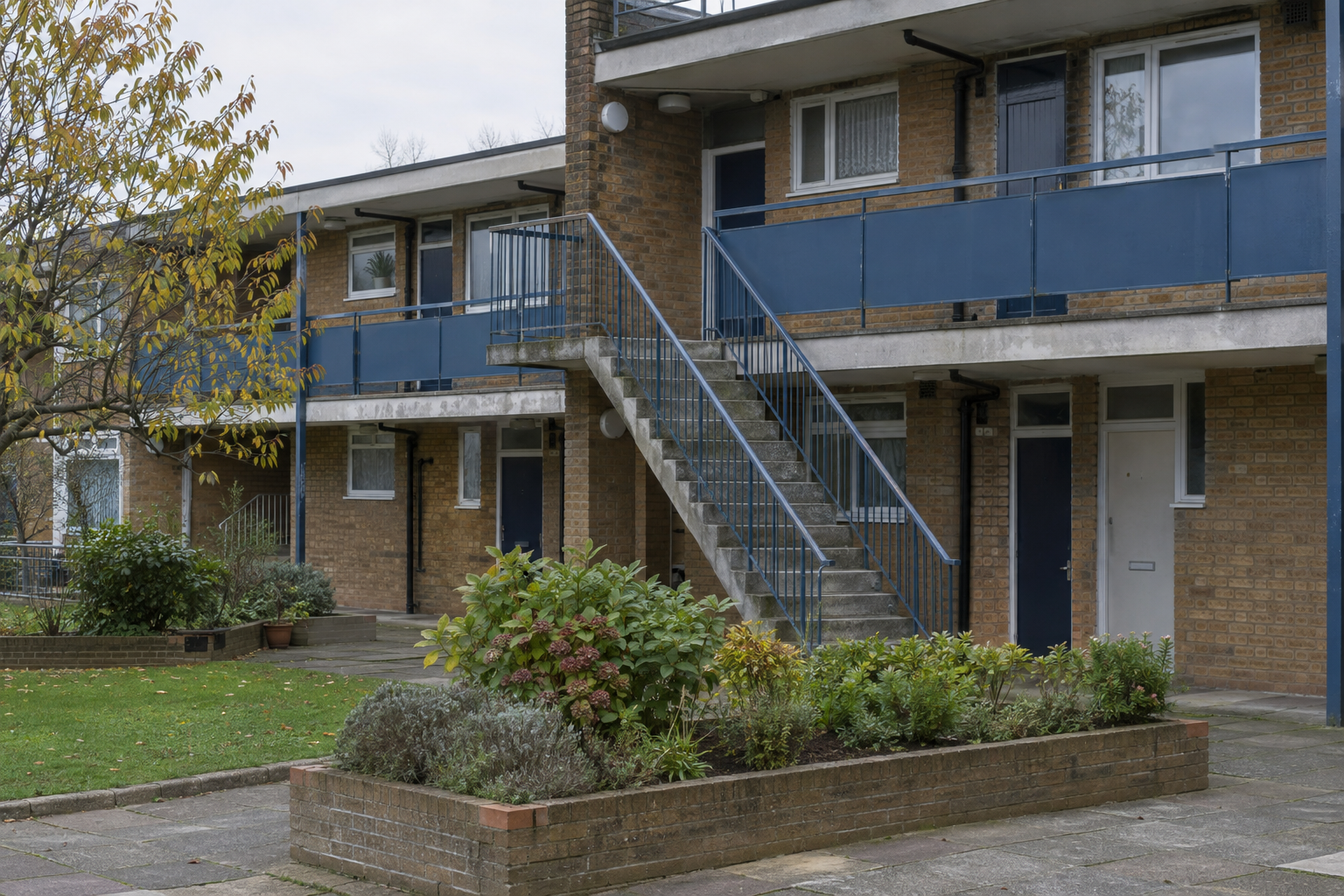
Social housing risks grow as repairs and new homes compete for funding
England’s social housing regulator has warned that landlords must balance sustained investment in existing homes with pressure to build more. Its latest risk assessment highlights weak finances, refinancing costs and the limits of selling properties to raise funds.
 By Tom Ashby, Residential Property ReporterPublished

Key facts
- The Regulator of Social Housing published its England-wide Sector Risk Profile on 22 October 2026.
- The regulator says private registered providers’ interest cover remains at historically low levels.
- The regulator identifies refinancing older, cheaper loans as a financial risk for landlords.
- The regulator warns that property sales can reduce local social housing availability and offer only a short-term funding solution.
- The regulator began proactive inspections in 2024 for social landlords owning at least 1,000 homes.
The Regulator of Social Housing published its 2026 Sector Risk Profile on 22 October 2026, warning that social landlords in England face growing financial and operational risks as they fund improvements to existing homes and new development. The regulator urged housing association boards and councillors to base difficult spending decisions on better information and a clear long-term strategy.
The assessment identifies a potentially fragile financial backdrop. According to the regulator, private registered providers remain financially weak, despite tentative signs that the deterioration in average performance may be levelling out. Interest cover, one of the financial measures highlighted in the report, remains at historically low levels.
The publication applies to registered social housing providers, including councils, non-profit housing associations, co-operatives and profit-making organisations. It draws on landlords’ regulatory returns and other information supplied to the regulator, rather than setting out a new funding programme.
What are the main social housing risks in 2026?
The Regulator of Social Housing says investment in existing properties has increased over several years, but substantial further spending is needed on building safety, energy efficiency and the condition of homes. This leaves landlords managing continuing demands on their budgets rather than a repair programme that is nearing completion.
Alongside those commitments, the regulator says both councils and private registered providers are increasingly expected to contribute new homes. Organisations without a recent development record face different challenges from established developers seeking to increase output or push their organisational capacity further.
For landlords considering different ways to finance construction, the report calls for an understanding of both the opportunities and risks of innovative funding models. It also identifies effective working between councils and private registered providers as important to meeting the need for additional social housing.
Borrowing presents a separate pressure. The regulator warns that landlords must manage the higher cost of capital and the refinancing of loans originally taken out when borrowing was much cheaper. Its assessment also says rising inflation and expectations of higher interest rates since the start of the war in the Middle East are being incorporated into business plans; those rate expectations are not confirmed future outcomes.
The risks extend beyond buildings and finance. According to the report, increasing dependence on digital systems, data and new technology makes cyber security, data protection and operational resilience more significant responsibilities for boards.
The regulator also cautions that tackling one problem can create another. It has seen some organisations place greater emphasis on selling properties because improvements would be uneconomic, or because sale proceeds are needed to finance upgrades elsewhere or new construction.
Such disposals can release money, the report says, but concentrated sales may reduce the number of social homes available in particular areas and damage relationships with other stakeholders. The regulator regards reliance on selling existing assets as a short-term response, not a basis for lasting financial sustainability.
Housing standards and inspections shape the backdrop
The Regulator of Social Housing links the investment challenge to changing expectations for housing quality and management. Its report identifies Awaab’s Law, alongside confirmed future requirements under the Decent Homes Standard and Minimum Energy Efficiency Standards, as matters that boards and councillors must understand and have systems in place to meet.
Building safety is also the subject of separate government proposals. The government has introduced an unsafe cladding bill proposing £500,000 penalties and a remediation backstop to strengthen enforcement against those responsible for unsafe buildings in England. Those proposals are distinct from the regulator’s assessment of sector-wide risks.
Regulatory scrutiny has changed too. The Regulator of Social Housing began proactive inspections in 2024 for all large social landlords, defined as those owning at least 1,000 homes. For housing associations and other private registered providers, integrated inspections cover both economic and consumer standards.
For councils, the regulator’s remit covers consumer standards and the rent standard. It does not regulate the financial viability of councils’ Housing Revenue Accounts, although the report says its consumer regulation work indicates that many of those accounts remain under pressure.
The regulator nevertheless says lessons from its governance casework can help local authorities improve outcomes for tenants. Its co-regulatory approach leaves boards and councillors responsible for running their organisations and accountable for the results they deliver.
Separate recent enforcement illustrates the range of matters under scrutiny. The regulator has ordered Concept Housing Association to prepare a contingency wind-down plan and commission independent work on its finances, leadership and tenant safety. That action concerns an individual provider rather than a finding about every landlord covered by the risk profile.
Regulator puts leadership and value for money at the centre
Jonathan Walters, chief executive of the Regulator of Social Housing, said landlords needed to take a longer-term approach while protecting their financial resilience. He placed responsibility on boards and councillors to make evidence-based choices that serve both existing tenants and people who will need social housing in future.
The report makes a distinction between possessing performance data and using it well. The regulator wants leaders to turn reliable information into useful insight and assess decisions against clearly defined criteria, rather than treating the collection of data as sufficient oversight.
Value for money is another stated priority. The regulator says more efficient operations can create additional investment capacity, making the way landlords run their businesses part of the response to competing demands on spending.
It also argues that strategic direction must reflect each landlord’s underlying purpose and, where relevant, its charitable objects. In the regulator’s view, changing a business plan in response to external pressures makes that guiding purpose more important, not less.
Business plans face further testing
The Regulator of Social Housing identifies stress-testing business plans and preparing mitigations for different scenarios as continuing priorities. Its expectation is that landlords consider how risks interact, rather than assess each financial, operational or housing-quality issue separately.
The report also says landlords may need to revise plans and establish new relationships as economic conditions and policy priorities change. This is a call for organisational preparedness, not a forecast of a particular level of housebuilding or investment.
The supplied extracts of the Sector Risk Profile do not set out a new implementation timetable for the housing standards discussed. Their immediate focus is the capacity of boards and councillors to maintain effective controls, meet regulatory requirements and make informed decisions about the resources available to their organisations.
Questions and answers
- What is the Sector Risk Profile 2026?
- It is the Regulator of Social Housing’s assessment of major risks facing registered social landlords in England. Published on 22 October 2026, it draws on regulatory returns and other information provided to the regulator.
- Which landlords does the social housing risk report cover?
- The report covers registered social housing providers in England, including councils, non-profit housing associations, co-operatives and profit-making organisations.
- Why are social landlords facing funding pressures?
- The regulator identifies sustained spending on existing homes, expectations to build more housing, higher borrowing costs and refinancing pressures. It says private registered providers remain financially weak despite tentative signs that average performance may be stabilising.
- What does the report say about selling social homes?
- The regulator says sales can release funds for improvements or development, but may reduce local social housing availability. It warns that relying on disposals is only a short-term financial response.
- Does the report set new deadlines for housing improvements?
- The supplied extracts do not set out a new implementation timetable. They say landlords must understand and prepare systems for requirements associated with Awaab’s Law, the Decent Homes Standard and Minimum Energy Efficiency Standards.
- When did proactive social housing inspections start?
- The Regulator of Social Housing began its proactive inspection programme in 2024 for large social landlords owning at least 1,000 homes.
- Does the regulator oversee council housing finances?
- The Regulator of Social Housing does not regulate the financial viability of councils’ Housing Revenue Accounts. Its council remit covers consumer standards and the rent standard, and its consumer work indicates financial pressure in many accounts.
Why this matters
For social tenants, the regulator’s assessment connects the quality and safety of existing homes with landlords’ ability to fund the work required. For people waiting for affordable housing, it highlights pressure on the same organisations to finance new supply. The warning about property sales adds a local dimension: releasing money for investment can also reduce the homes available in an area. The report places responsibility on boards and councillors to weigh these competing demands while maintaining financially sustainable organisations.
Sources
This article is checked against its sources under our editorial policy. It is general information only and is not financial or mortgage advice. See our corrections policy to report an error.
Related coverage